Where to Put the Litter Box
November 4, 2026
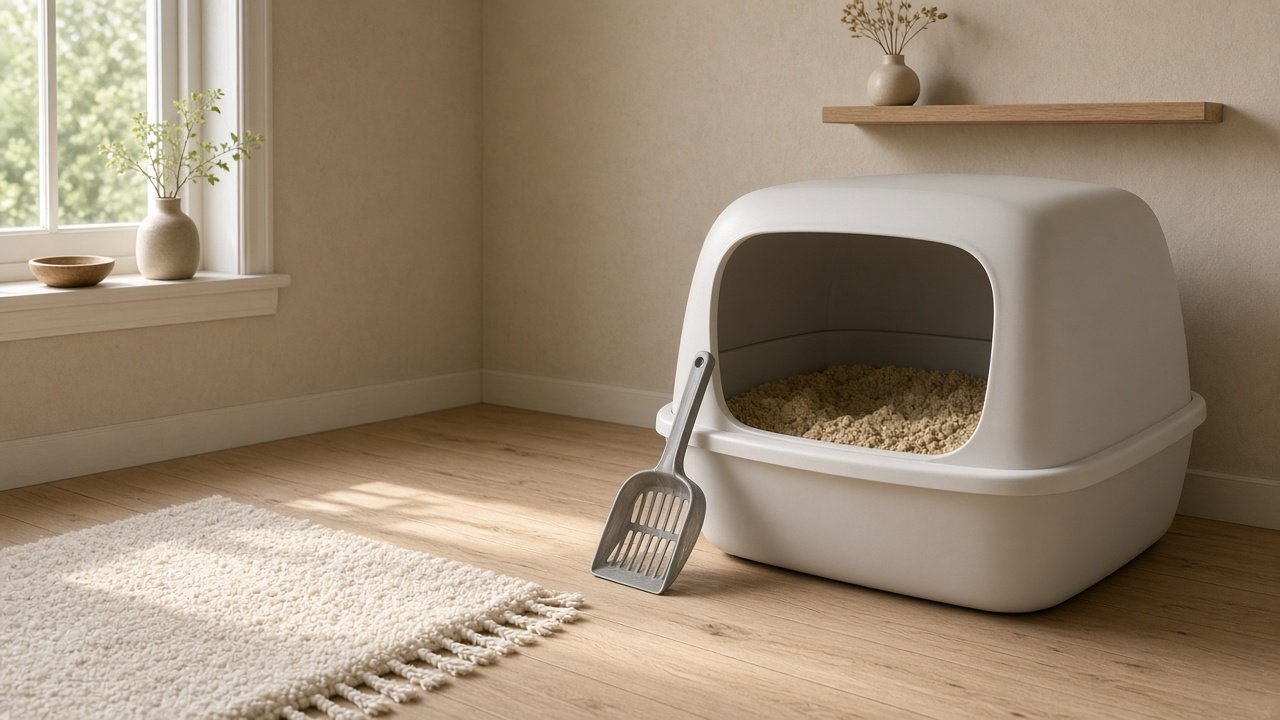
A cat who misses the box is often answering the room, not arguing with you. Placement, number, and size come before any lecture. Ohio State's Indoor Pet Initiative treats the box as a private stop the cat can reach without a negotiation.
How many, and on which floor
The rule Ohio State uses is one box per cat, plus one. One cat, two boxes. Two cats, three. Texas A&M's veterinary college states the same count. The extra box means a cat is never shut out of the only option because another cat is in it, or standing in the doorway.
In a house with stairs, put a box on every level. Cats will not trek to a distant floor if a closer corner will do, and an older cat may not manage the stairs at all. The University of Wisconsin veterinary school says senior cats need easy access, not a box that requires a climb. Spread the boxes into different rooms. A row of three in one bathroom is one place, not three.
The room itself
Quiet and private. Not beside a washer, a furnace, or an air duct that can roar on while the cat is mid-squat. Not where a person or another animal can appear from behind. Not under a low sink or a table the cat has to fold into. The cat needs to stand and turn inside the box, and the path to it has to be clear. A box behind the couch, or next to the dog's bed, often goes unused because the trip is the problem.
Keep the box away from food and water. Wisconsin says not near feeding stations. A cat who eats and eliminates in the same closet is being asked to ignore a preference most cats keep. If the only bathroom is also the feeding room, move the bowls, not the cat's standards.
Do not relocate a box the cat already uses and expect instant agreement. Cats return to places that worked. If you must move one, shift it a little at a time, or add the new box first and leave the old one until the new one is clearly in use.
Size and shape
Ohio State says most cats prefer a large uncovered box, big enough to stand on all fours and turn around. Covered boxes trap odor and block the view, which matters when another pet might approach. Some cats accept a cover if it is kept very clean. If you want to know, set an open box beside the covered one and see which gets used. Do not pull every cover in the house on the same day.
High sides help a cat who flings litter. Low sides help a kitten or an older cat who cannot step over a rim. Wisconsin adds a size you can picture: at least one and a half to two times the cat's length from nose to rump. A storage bin or a mixing tray, cleaned and used only for this, is often larger than the box sold as a standard. The point is room to dig and turn, not a label.
Fine-grained, unscented litter is what most cats prefer in the research Ohio State cites. Scented litter and a room deodorizer next to the box are common reasons a cat quits. Scoop daily. Wash the box weekly with mild dish soap, then rinse well. A dirty box is a placement problem even when the room is perfect.
Cats are particular about a clean box. Ohio State says most will skip a dirty one and pick a cleaner surface, which may be the carpet, the bed, or the sofa. That is why the daily scoop and the weekly wash are part of placement. A perfect room with a neglected box is still the wrong place.
Each cat is also marking a home. More than one cat means more than one station, in rooms the cats actually walk through, not a closet they have to cross a rival to reach. If one cat waits outside a room while the other is inside, that doorway is a blocked box. Add another box where the waiting cat already spends time.
When the cat stops using it
Check the room before you blame the cat. A new appliance, a new dog, a closed door, a box on the wrong floor, or a cover that went on last week will do it. Pain and illness also send cats out of the box. If placement and cleaning are already right and the misses continue, call a veterinarian. Spraying on walls is a different message from a puddle next to a box that is hard to reach, and the clinic can help you tell them apart.
A low side is a kindness for a kitten or an older cat who cannot step into a deep box. A high rim is a kindness for a digger who redecorates the floor. Neither choice fixes a box in the wrong room. Walk the path yourself. If you have to squeeze, climb, or pass a noisy machine, the cat has already decided.
Give each cat a box they can walk to, on the floor they live on, in a room that stays quiet. Scoop it. Leave the perfume out. The box is a piece of furniture with a job, and the job fails when the path to it is a surprise.